- •
The official ZKsync Bridge offers the most direct path to ZKsync Era without relying on third-party liquidity pools. - •
Bridging requires the correct gas token on the source network, not only Ethereum, to prevent failed or delayed transfers. - •
Third-party bridges such as Orbiter Finance are useful when assets are distributed across multiple Layer 2 networks.
ZKsync Era has become a practical destination for users moving activity off Ethereum mainnet due to lower execution costs, native account abstraction, and growing zkEVM support for live DeFi and NFT use cases. Liquidity migration, airdrop positioning, and early access to zk-native applications are the main reasons people currently bridge to ZKsync Era.
In this guide, you will learn how to move assets from Ethereum to ZKsync Era using the official ZKsync Bridge, with clear steps, fee expectations, and security checks so you can complete the transfer with confidence.
Can I Bridge to ZKsync Era?
Yes. Assets can be transferred from Ethereum mainnet to ZKsync Era using zk-compatible bridges. The most direct path is the official ZKsync Bridge, which moves ETH and supported tokens from L1 into the rollup without relying on liquidity pools or intermediaries.
Preparations Before Bridging:
Before you Bridge to ZKsync Era, make sure a few basics are covered.
- A ZKsync-compatible Web3 wallet such as MetaMask, Trust Wallet, or Argent. If you’re using MetaMask, you will need to manually add the ZKsync Era network in the settings so the wallet can recognize incoming assets.
- The relevant gas fee token on the source network you are bridging from, so the transaction can be processed without interruption
- ZKsync Era added to your wallet interface if it does not appear automatically
- A stable internet connection to avoid failed signatures or incomplete confirmations
If you need to source gas tokens before initiating the transfer, some users use Binance due to its deep liquidity and broad token availability.
Step-by-Step Guide: Bridge to ZKsync Era via ZKsync Bridge
The official ZKsync Bridge is designed specifically for Ethereum to ZKsync Era transfers. It does not route through third-party liquidity pools, which lowers failure risk and simplifies settlement logic.
The transfer is processed as a signed message rather than a traditional L1 transaction, which improves execution efficiency while preserving Ethereum security assumptions.
What are the Fees?
The official ZKsync Bridge charges no protocol fee. You only pay Ethereum gas to submit the transfer. In most cases, this remains under one dollar, depending on network load. Once assets arrive on ZKsync Era, subsequent transactions cost significantly less than L1 execution.
Alternatives to ZKsync Bridge
The official bridge covers Ethereum to ZKsync Era transfers, but other platforms can be useful in cases where assets are spread across different Layer 2 networks.
Orbiter Finance
Orbiter Finance supports transfers between multiple rollups, including ZKsync Era. It uses a contract-based routing model and works well for users moving assets across several L2s in one workflow.
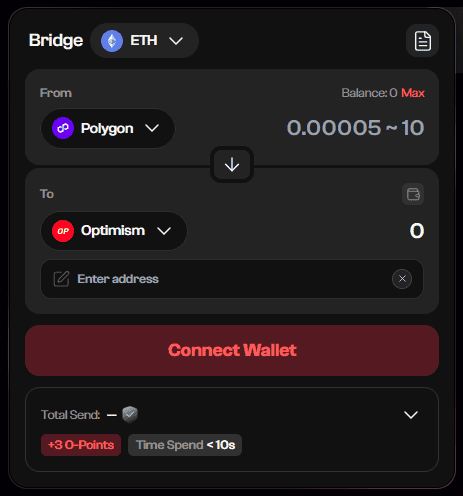
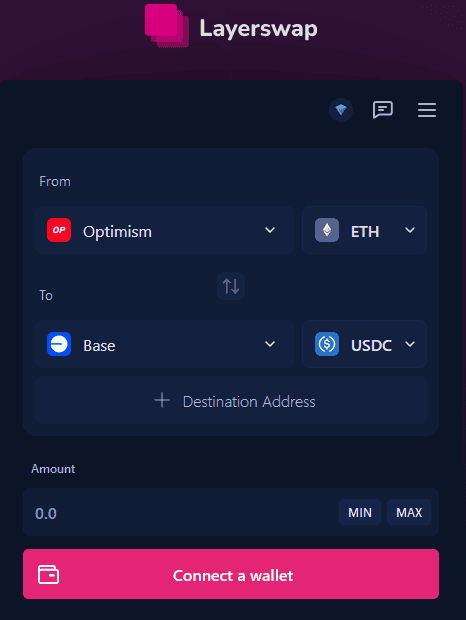
Layerswap
Layerswap focuses on transfers between centralized exchanges and rollups. It is often used when funds are held on an exchange and need to be moved directly to ZKsync Era without manual L1 interaction.
Security Considerations and Troubleshooting
Always verify contract addresses before signing. Phishing sites often mimic the ZKsync Bridge interface with subtle URL changes. If a transaction appears stuck, check Ethereum mempool status before attempting a retry.
Tip: Avoid bridging your full balance in one transaction. Splitting transfers helps manage risk and simplifies recovery if network conditions shift.
Bottom Line
Bridging to ZKsync Era allows you to move assets from another network into a lower-cost execution environment secured by Ethereum. The process itself is straightforward when using the official ZKsync Bridge, with gas fees depending on the source network. Once the transfer is complete, your assets become available on ZKsync Era for transactions, DeFi interactions, NFT activity, or other onchain operations supported by the network.
FAQs
1. Is the official ZKsync Bridge safe to use?
Yes. It is maintained by the ZKsync team and uses native verification rather than pooled liquidity.
2. How long does it take to Bridge to ZKsync Era?
Transfers usually complete within minutes, depending on Ethereum congestion.
3. Do I need ETH after bridging?
Yes. ETH is still required for transaction fees on ZKsync Era.