- •
StarkGate offers the most protocol-aligned route to move assets from Ethereum directly into Starknet. - •
Most bridging issues stem from wallet setup or gas planning rather than StarkGate itself. - •
Holding ETH for Ethereum fees and STRK for Starknet transactions prevents post-bridge execution delays.
Starknet is moving beyond a developer-only phase. Users are now transferring capital to interact directly with on-chain applications, early DeFi systems, and infrastructure built natively in Cairo. This shift explains why more users are choosing to Bridge to Starknet instead of relying on wrapped assets or indirect access.
At the same time, the network is entering a more mature stage. Starknet has discussed stablecoin expansion and broader asset support, pointing toward deeper liquidity and sustained usage. Bridging is no longer a speculative move. It is a practical step for users who want direct exposure. This guide explains how to bridge to Starknet using StarkGate and reviews alternative options with key security considerations.
Prerequisites
Before you Bridge to Starknet, a few technical requirements need to be in place. You need an Ethereum wallet such as MetaMask that holds the assets you plan to transfer. Since Starknet uses a different account model, you also need a Starknet-compatible wallet like Argent X or Braavos. These wallets are not optional, as Starknet does not support standard EVM accounts.
Gas planning is important. Transactions start on Ethereum and settle on Starknet, so ETH is required for Ethereum gas. Once funds arrive, Starknet transactions use $STRK. You can acquire STRK for gas fees on Bybit.
It is also worth confirming that your wallet has Starknet enabled and properly initialized. Missing this step often causes confusion when users think assets have not arrived.
Step-by-Step Guide: Bridge to Starknet via StarkGate
StarkGate is the official bridge designed specifically for Starknet. It supports transfers from Ethereum to Starknet and is maintained by StarkWare. While it does not support other source chains, it remains the most direct and protocol-aligned method to Bridge to Starknet.
Alternative Platforms
StarkGate is not suitable for every scenario, especially if your assets are on networks other than Ethereum. In those cases, third-party bridges can help.
RocketX
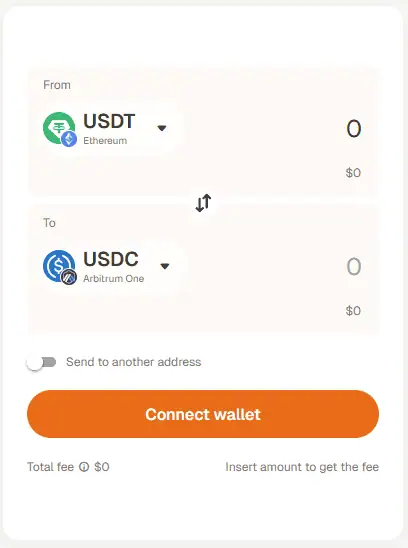
RocketX supports cross-chain transfers from multiple Layer 1 and Layer 2 networks into Starknet. It combines swapping and bridging in one flow, which reduces manual steps when coming from non-Ethereum chains.
RhinoFi
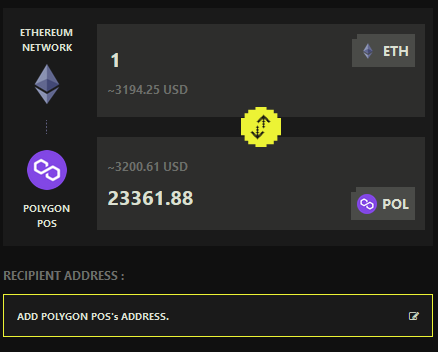
RhinoFi focuses on multi-chain access with a simplified interface. It supports Starknet as a destination network and is often used by users who already operate across several rollups and want faster routing without handling multiple approvals manually.
Choosing the Right Bridge for Transfers to Starknet
Transferring assets to Starknet requires choosing a bridge that aligns with Starknet’s account model, your source network, and the assets you plan to move. While several bridges support Starknet, evaluating a few core factors helps reduce execution delays and avoids avoidable setup issues.
- Security: Review the bridge’s audit disclosures, contract transparency, and operational history. Preference should be given to bridges developed or maintained by teams closely aligned with Starknet’s core infrastructure.
- Network Compatibility: Confirm that the bridge supports your source network and Starknet as the destination, along with the specific tokens you intend to transfer.
- Fees and Settlement: Evaluate both Ethereum gas costs and Starknet settlement behavior. Higher congestion on the source chain can extend finalization times even if the bridge itself is functioning correctly.
- User Experience: A clear interface with explicit wallet connection steps reduces the risk of misconfigured Starknet wallets or incomplete transfers.
Bottom Line
For most users, the decision to Bridge to Starknet is tied to intent rather than experimentation. You are preparing to interact with applications that run natively on Starknet, not mirrored versions on Ethereum. StarkGate remains the cleanest path if your assets are already on Ethereum. It aligns closely with Starknet’s account model and settlement logic, which reduces compatibility issues later. Once funds are bridged, the next step is understanding Starknet-native tooling, fee behavior, and application design. Bridging is not the end goal. It is the starting point.
FAQs
1. How long does it take to Bridge to Starknet using StarkGate?
Timing depends on Ethereum congestion. Most transfers finalize within minutes, but delays can occur during peak periods.
2. Do I need STRK immediately after bridging?
Yes. Starknet transactions require STRK for fees, so having a small balance ready avoids being blocked after arrival.
3. Can I Bridge to Starknet from non-Ethereum chains using StarkGate?
No. StarkGate only supports Ethereum as the source chain. Other networks require third-party bridges.